Playing a “Masterpiece” Guarantee a Beautiful Sound for Anyone?
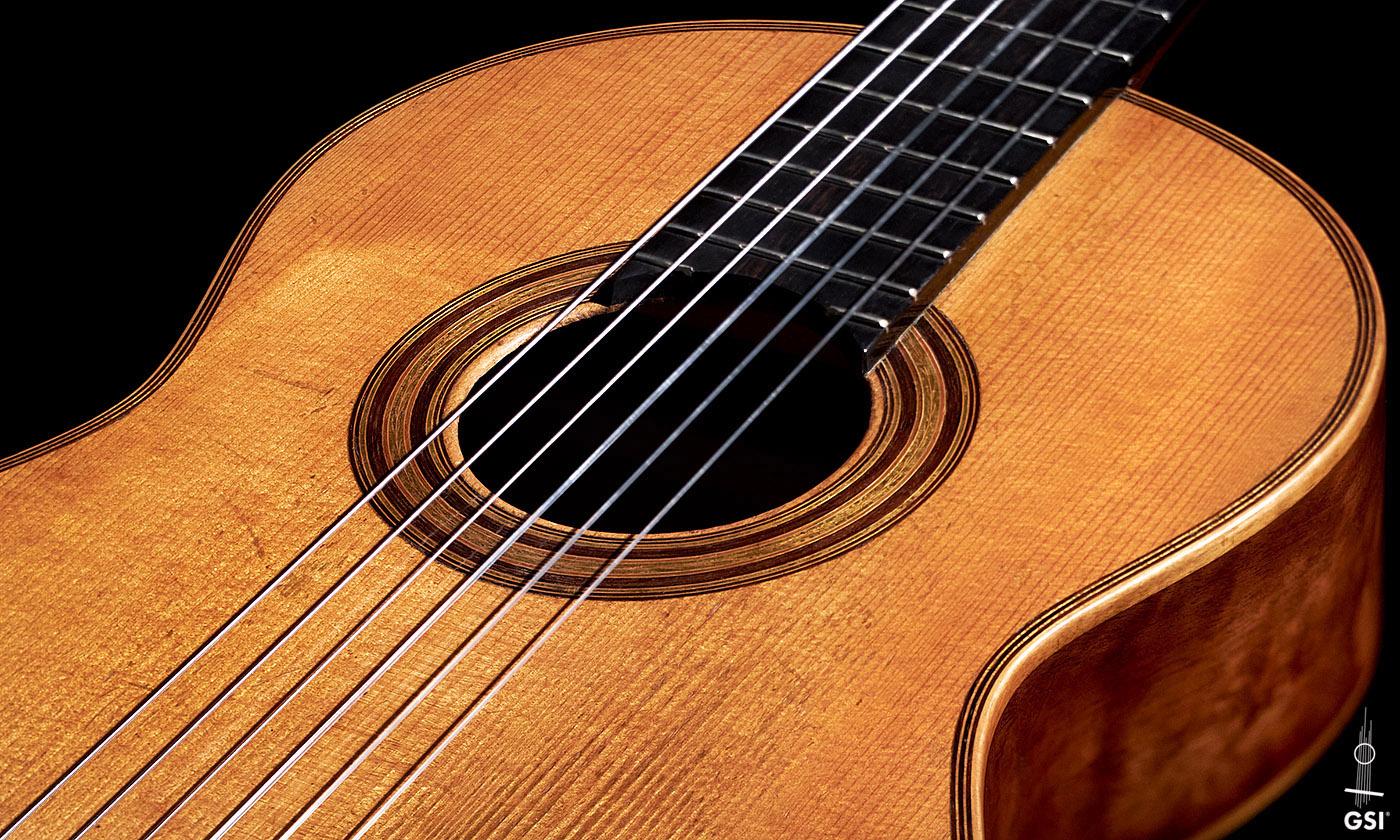 Instruments known as “masterpieces” possess a certain special resonance. Their value is likely enhanced by the history passed down over many years and the fact that they have been cherished by renowned musicians.
But does that mean anyone can easily produce a wonderful sound simply by getting their hands on a masterpiece?
In reality, that’s not necessarily the case.
Masterpieces Aren’t Necessarily Easy to Play
Even instruments that have stood the test of time or guitars made by historically acclaimed luthiers aren’t necessarily as easy to play as modern instruments. In fact, it’s not uncommon for them to require considerable ingenuity and technical skill to draw out their full sound.
The sound doesn’t come out the way you want it to. Phrases you’d normally play effortlessly just don’t feel right.
At times like these, it’s tempting to blame the instrument, but in reality, you’re often made painfully aware of your own technical shortcomings.
It is not the instrument that adapts to the player; rather, the player must understand the instrument’s unique character and meet it halfway.
The Indescribable Tone That Lies Beyond
However, even with such instruments, when you manage to draw out the sound with the right touch, you may encounter a resonance that takes your breath away.
The attack of the sound, its resonance, the richness of its overtones, and above all, the charm of the tone itself.
This is different from simply having a loud volume or a sound that carries far. It is an indescribable musical charm that emerges only when the instrument responds to the player’s intent.
That is precisely why, even while finding it difficult to handle, you might still find yourself wanting to pick up that instrument again.
Not all old instruments are masterpieces
Of course, an instrument cannot be called a masterpiece simply because it is old.
Even among instruments crafted by the same maker, there are individual differences depending on the wood, the conditions during construction, and the state of preservation. Naturally, the character of the sound also varies.
Furthermore, historical reputation or market price does not necessarily determine the value of an instrument to you personally.
I myself have played a wide variety of instruments over the years, and I’ve experienced time and again that you can’t judge an instrument based solely on the maker’s name or its age.
Is a Player’s History Also Etched Into the Instrument?
What’s fascinating is that instruments that have been passed down through generations each possess a unique character.
Which musicians have played it, and what kind of music have they performed? I sometimes feel that this history is reflected in some way in the instrument’s tone and resonance.
Of course, I cannot definitively claim that the musicality of past players has physically permeated the instrument. However, the changes the instrument has undergone through years of playing, its history of repairs and adjustments, and even our own preconceptions about the instrument may all contribute to shaping its unique character.
When I think about it this way, playing an instrument isn’t just about making wood and strings vibrate—it’s also about engaging with the passage of time that the instrument has experienced.
What constitutes a “masterpiece” for me?
So, what truly makes an instrument valuable?
Is it the work of a famous luthier? Is it an antique? Is it expensive? These factors certainly serve as criteria for evaluation.
However, ultimately, I believe it is crucial for the performer to have their own criteria—to know what kind of sound they seek and what kind of music they wish to express.
If those values are clear, one can understand the instrument’s strengths and weaknesses and make the most of its unique character. An instrument doesn’t have to be a historically renowned “masterpiece” to become irreplaceable to a performer.
It’s not because an instrument is a “masterpiece” that it produces a beautiful sound.
By engaging sincerely with the instrument, understanding its unique character, and pursuing your own musical vision—it is through this cumulative process that the instrument’s truly captivating resonance is revealed.
Perhaps a “masterpiece” is not merely a title bestowed by others, but something discovered within the relationship between the performer and the instrument.
Translated with DeepL.com (free version)